
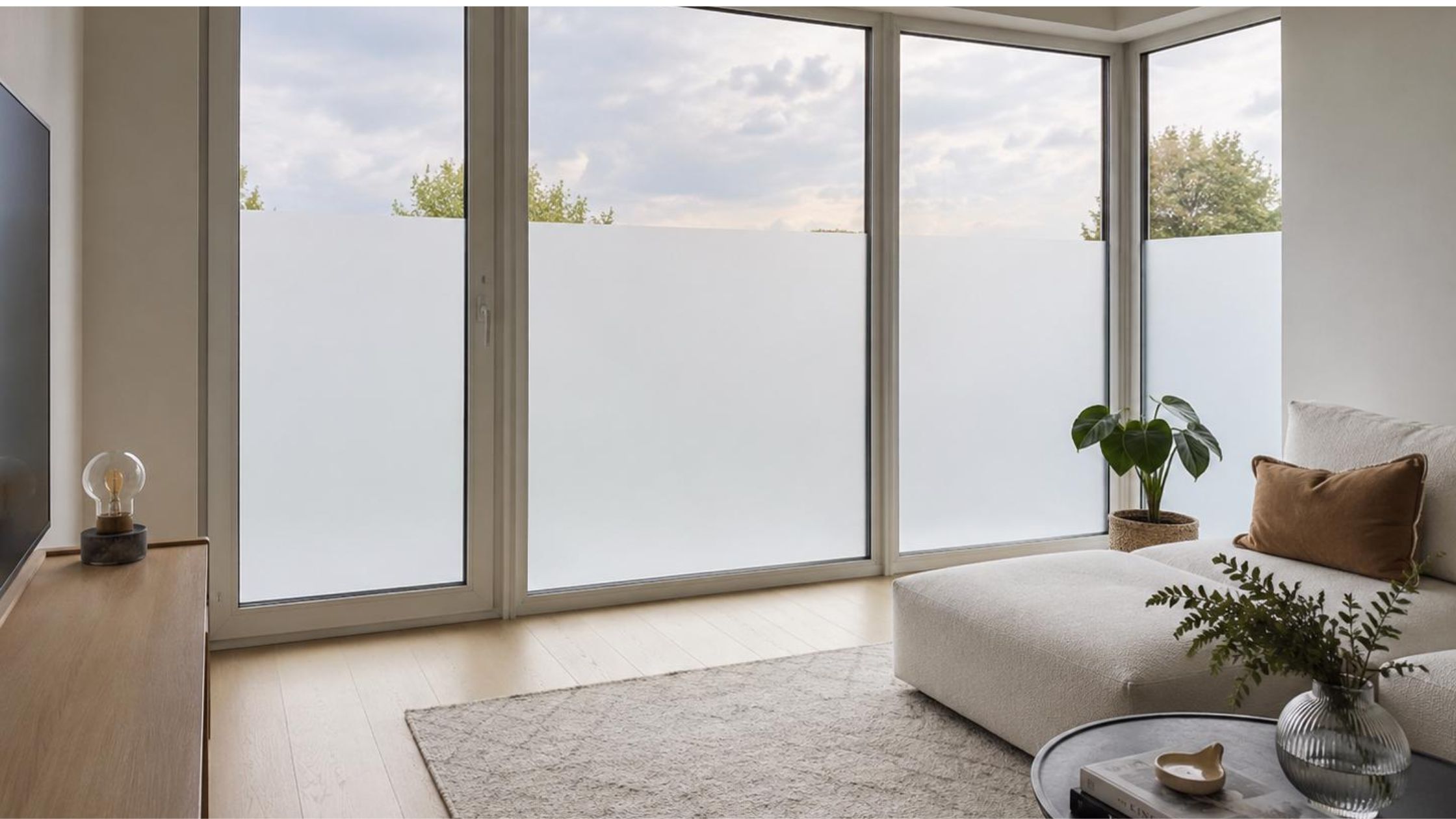
Windows can provide natural light and an open feel, but they can also create privacy concerns. This is especially true for bathrooms, bedrooms, entryways, home offices, and windows that face neighboring properties or busy streets. Homeowners looking for more privacy often compare privacy window film with frosted glass.
Both options can reduce visibility through glass, but they work differently and offer different advantages. Frosted glass is manufactured or treated to create a permanently obscured surface, while window film is applied to existing glass to change its appearance and privacy characteristics. Understanding the differences between these options can help homeowners determine which provides better value for their property, budget, and long term needs.
What Is a Privacy Window Film?
Privacy window film is a material applied to an existing glass surface to reduce visibility through the window. Depending on the type selected, the film can provide different levels of privacy while still allowing natural light into the room. Privacy films are available in different styles, shades, patterns, and finishes. Some provide a frosted appearance, while others create a more opaque or reflective effect.
One of the main advantages of privacy window film is that it can be installed on existing windows. Homeowners do not necessarily need to replace their current glass to achieve a different level of privacy. This can make film a practical option for homeowners who want to improve privacy without undertaking a larger window replacement project.
What Is Frosted Glass?
Frosted glass is glass that has been manufactured or treated to create a translucent, textured, or obscured appearance. The treatment prevents people from seeing clearly through the glass while allowing some natural light to pass through.
Frosted glass is commonly used in bathrooms, shower enclosures, office spaces, entry doors, and other areas where privacy is important. Unlike a removable film, the frosted appearance is generally part of the glass itself. This makes it a permanent privacy solution unless the entire glass panel is replaced.
Privacy Window Film vs. Frosted Glass
The biggest difference between these options is how privacy is created. With privacy window film, a layer of material is applied to the existing glass. With frosted glass, the glass itself has a permanently obscured surface.
Both can provide effective privacy, but the right choice depends on how much flexibility, customization, and long-term permanence the homeowner wants. At Palm Beach Tint Pros, we help homeowners consider their options based on their existing windows, privacy goals, and desired level of customization. For homeowners who already have functional windows and simply want to increase privacy, window film can avoid the need for glass replacement.
Comparing Installation Costs
Cost is often one of the biggest considerations when choosing between privacy window film and frosted glass. Installing frosted glass may require replacing an existing window or glass panel. The total cost can include the new glass, measurements, removal of the existing glass, installation, and associated labor.
Privacy film can often be applied directly to the existing glass. Because the original window does not need to be replaced, the initial project may be less disruptive and potentially more cost effective. Actual costs vary depending on window size, number of windows, glass type, film selection, installation requirements, and the type of frosted glass being considered. Homeowners should compare the complete project cost rather than looking only at the price of the material.
Flexibility and Future Changes
A homeowner may want a particular level of privacy today but have different requirements in the future. Window film provides greater flexibility because it can potentially be removed or replaced when preferences change.
Frosted glass is more permanent. If the homeowner later wants clear glass or a different appearance, replacing the glass panel may be necessary. This difference can be particularly important for homeowners who are renting, renovating, or unsure about committing to a permanent design.
Design Options
Both options can contribute to the appearance of a home. Frosted glass typically provides a clean, uniform translucent appearance. It can work well with modern and minimalist interior designs.
Decorative window film offers more variety. Films can be available in frosted patterns, geometric designs, textures, gradients, and other decorative styles. This allows homeowners to combine privacy with a specific visual design. For example, a homeowner may choose a patterned film for a bathroom window or a subtle frosted design for a home office.
Privacy During the Day and Night
Homeowners should also consider when privacy is needed. Some reflective privacy films may provide stronger daytime privacy when the exterior is brighter than the interior. However, their privacy effect can change at night when interior lights are turned on.
Frosted glass generally provides consistent obscured visibility regardless of the time of day. Homeowners should understand the privacy characteristics of the specific film before installation rather than assuming that every privacy film provides the same results.
Where Privacy Window Film Can Be Useful
Privacy film can be used in many areas of a home. Bathrooms are a common application because homeowners may want privacy without completely blocking natural light. Bedrooms, entry doors, sidelights, home offices, and windows facing neighboring properties can also benefit. It can also be useful for ground floor windows where pedestrians can easily see into the home. The film can be selected based on the privacy level and appearance desired for each space.
Where Frosted Glass May Make More Sense
Frosted glass may be appealing when a homeowner wants a permanent privacy solution and is already replacing or installing new windows. For new construction or major remodeling projects, selecting frosted glass from the beginning may make sense. It can also be appropriate when the homeowner wants privacy to be an inherent characteristic of the glass rather than an applied material. The decision ultimately depends on the project’s goals and budget.
Durability and Lifespan
The durability of either option depends on several factors. Frosted glass is a permanent glass treatment and does not typically peel away like an applied film. However, the glass can still be scratched, cracked, or damaged through normal use.
Privacy film is designed to adhere to the glass but can eventually show signs of wear depending on its quality, exposure, installation, and maintenance. High quality professional installation can help improve the appearance and performance of window film over time.
Can Privacy Film Be Removed?
One of the major advantages of privacy window film is that it can generally be removed. If a homeowner changes their mind, remodels a room, sells the property, or wants a different appearance, the existing film can potentially be removed and replaced.
This flexibility can make film attractive to homeowners who do not want to make a permanent change to their windows. Frosted glass does not offer the same flexibility because the privacy treatment is part of the glass itself.
Which Option Provides Better Value?
If value means lower installation disruption, flexibility, customization, and the ability to use existing windows, privacy window film may be the more practical choice. If value means a permanent privacy solution that is integrated directly into the glass, frosted glass may be preferable. For homeowners who already have good quality windows, applying film can provide a way to change their appearance and privacy without replacing otherwise functional glass.
Privacy Film for Home Renovation Projects
Window film can be particularly useful during home improvement projects. A homeowner may want to update the appearance of a bathroom, home office, bedroom, or entryway without replacing the existing windows.
Installing frosted window film or another privacy focused product can provide a visual update while preserving the existing glass. This can make film an option worth considering when the goal is to improve a specific room without undertaking a complete window replacement.
Choosing the Right Privacy Solution
Before selecting a privacy solution, homeowners should consider how much privacy is needed, when privacy is required, how much natural light should remain, and whether the solution should be permanent. The location of the window also matters. A bathroom window may require a different solution than a living room window facing a street.
Homeowners should also consider appearance, maintenance, installation requirements, and the possibility of changing the solution in the future. A professional window film installer can help explain available options and determine whether film is suitable for the existing glass.
Conclusion
Both privacy window film and frosted glass can provide effective ways to improve privacy while allowing natural light into a home. However, they offer different approaches.
Privacy window film can be applied to existing glass, making it a flexible option for homeowners who want to improve privacy without replacing their windows. It also offers a wide range of finishes and designs, including frosted window film and other forms of decorative window film. For businesses and commercial properties, commercial window tinting can provide additional privacy while supporting a more comfortable and professional environment.
Frosted glass provides a more permanent solution and may be particularly appropriate for new construction or projects where glass replacement is already planned.
For homeowners comparing the two options, the best choice depends on budget, design preferences, privacy requirements, installation needs, and whether a permanent or flexible solution is preferred. Evaluating these factors can help you choose the option that provides the best overall value for your home.