Florida is an ideal place to own a boat, but the same sunshine that makes boating enjoyable can create ongoing problems for a vessel’s interior. Strong sunlight enters through the boat’s windows and can contribute to heat buildup, glare, and prolonged ultraviolet exposure.
Over time, continuous sun exposure can affect upholstery, vinyl, wood finishes, flooring, curtains, and other interior surfaces. It can also make cabins and enclosed helm areas uncomfortably warm, particularly when a boat is sitting at the dock or operating during the brightest part of the day.
Marine window tinting offers boat owners a way to manage these conditions without eliminating natural light or sacrificing the view outside. Marine grade window films can reduce solar heat and glare while providing significant UV protection. Some products are specifically designed for the demanding conditions found on boats and yachts, including exposure to moisture, salt air, curved glazing, acrylic, and polycarbonate windows.
What Is Marine Window Tinting?
Marine window tinting involves applying a specialized window film to boat or yacht glazing. Depending on the product, the film can help control solar heat, glare, visible light, and ultraviolet exposure.
Although marine window tint may look similar to automotive or architectural window tint, the application environment is different. Boats can have curved windows, acrylic or polycarbonate glazing, tight installation areas, constant moisture exposure, salt air, and movement caused by the vessel operating on the water. For this reason, boat owners should not automatically assume that a standard automotive film is suitable for marine applications.
Marine specific products are available for different glazing materials and vessel applications. For example, STEK Marine’s Aqua Shade is designed for tempered and laminated glass as well as acrylic and polycarbonate, illustrating why the window material needs to be considered before selecting a film.
Why Florida Sun Can Be Hard on Boat Interiors
A boat spends much of its life in an environment with direct sunlight and large expanses of exposed glass. Unlike a typical home, a vessel may have windows positioned to receive strong sunlight throughout the day while surrounded by reflective water surfaces. This creates a challenging environment for interior materials.
Upholstery, vinyl seating, wood trim, flooring, and other finishes can gradually show signs of prolonged sun exposure. The effect may include fading, discoloration, drying, or general deterioration depending on the material and exposure.
Marine window film can help reduce the amount of UV radiation reaching the interior. Some current marine films advertise UV rejection of approximately 99% or more, although actual performance varies by product and should be verified in the manufacturer’s specifications.
Marine UV Protection for Boat Interiors
One of the strongest reasons to consider marine window tinting is marine UV protection. At Palm Beach Tint Pros, we understand that ultraviolet radiation is invisible, but repeated exposure can affect materials over time. Boat owners who have invested in high-quality upholstery, cabinetry, flooring, electronics, and decorative finishes may want to reduce unnecessary UV exposure entering through the glazing.
Marine window film provides a protective layer between the outside environment and the interior. By filtering UV radiation before it reaches interior surfaces, the film can help reduce the rate of sun related fading and deterioration.
This does not mean window film makes interior materials immune to sunlight. It is one component of an overall protection strategy that can also include covers, shades, appropriate materials, and regular maintenance.
Protecting Upholstery and Vinyl
Boat upholstery is particularly important because replacement can be expensive and inconvenient. Seating areas can receive substantial direct sunlight, especially on center consoles, cruisers, sportfish boats, and yachts with large cabin windows. Continued UV exposure can contribute to fading and material degradation.
A marine window film with strong UV rejection can reduce the amount of ultraviolet radiation entering through the glass. This can help protect seating, cushions, curtains, and other interior materials from unnecessary exposure. For boat owners considering an interior refurbishment, adding marine window tinting can also be part of a broader strategy to preserve the new materials after installation.
Choosing the Right Boat Window Tint
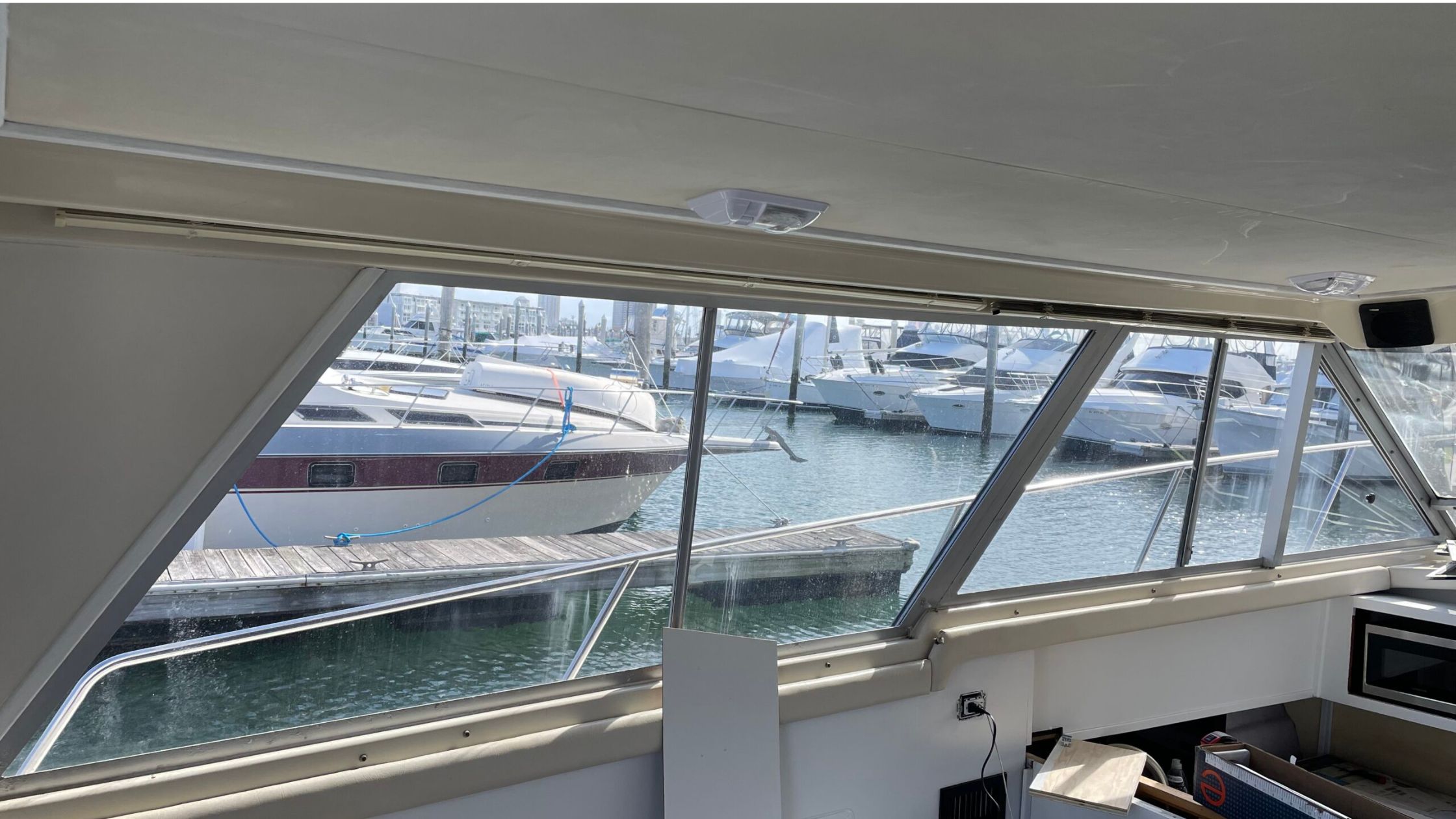
The best boat window tint depends on the purpose of each window. A helm window may require a lighter film to preserve visibility while still reducing glare and solar heat. Cabin windows may allow for a different visible light transmission level where privacy and heat control are more important.
Boat owners should consider the location of the glass, the direction of sunlight, the type of glazing, desired privacy, visibility requirements, and the vessel’s onboard electronics. The film’s visible light transmission, often referred to as VLT, is particularly important. A lower VLT generally means a darker film, while a higher VLT allows more visible light to pass through. The right balance is about comfort and protection without creating an unnecessarily dark interior or compromising visibility.
Why Marine Grade Film Matters
Marine applications present conditions that ordinary window film may not be designed to handle. Salt air, moisture, temperature changes, curved surfaces, and different glazing materials can all affect film performance and installation.
Some marine films are specifically formulated for acrylic and polycarbonate surfaces. STEK Marine, for example, uses a TPU based technology designed to bond to glass, acrylic, and polycarbonate and states that the formulation is intended to reduce issues such as bubbles, peeling, and edge lift associated with unsuitable conventional films. This illustrates why film selection should be based on the vessel’s actual windows rather than simply choosing a familiar automotive tint.
Marine Window Film and Onboard Electronics
Modern boats depend heavily on electronics, including GPS, VHF radios, AIS, radar, chartplotters, Wi Fi, and other communication and navigation systems.. Some marine installers recommend non metallic film options for vessels where signal transmission is a concern. Sea Cool, for example, specifically describes non metallic marine films as suitable for signal sensitive yacht environments and highlights their use around GPS, VHF, AIS, cellular, Wi Fi, and other electronics.
This does not mean every metallic film will interfere with every electronic system. Instead, boat owners should discuss the vessel’s electronics with the installer before selecting a film. A professional assessment can help determine whether a ceramic or other non metallic option is appropriate.
Yacht Window Film for Larger Vessels
Larger yachts often have extensive glazing throughout salons, staterooms, pilothouses, and other interior areas. This creates both an aesthetic opportunity and a protection challenge. A consistent yacht window film installation can give different areas of the vessel a more uniform appearance while helping control heat, glare, and UV exposure.
However, larger yachts can also have a greater variety of glazing materials and window shapes. Curved glass, acrylic panels, polycarbonate components, and unusual frame configurations may require different installation techniques. Marine film selection should therefore be based on the actual glazing system rather than simply the vessel’s size or style.
Marine Window Tinting for Different Boat Types
Marine window tinting can be useful across a wide range of vessels. Center consoles may benefit from glare control and UV protection around helm areas and enclosed sections. For boat owners comparing different types of window film, it is also useful to understand how smart film technology differs from traditional marine tint. Residential Smart Film is designed primarily for homes where occupants want switchable privacy for windows, doors, bathrooms, bedrooms, or interior glass partitions. Commercial Smart Film serves a similar purpose in offices, conference rooms, retail spaces, and other commercial environments where privacy can be changed on demand.
These smart film solutions are different from marine window tinting because their primary purpose is typically switchable privacy rather than solar and UV protection in a marine environment. Boat owners should therefore choose a film based on the vessel’s glazing, exposure, electronics, and specific performance requirements.
Can Marine Window Tint Help Protect the Boat’s Value?
Marine window tinting should not be viewed as a guaranteed way to increase resale value, but protecting the condition of a boat’s interior can be valuable. A well maintained interior generally presents better than one showing extensive fading, discoloration, or sun related deterioration.
By reducing UV exposure and managing solar heat, marine window film can become part of a broader maintenance strategy designed to preserve the vessel’s interior condition. This can be especially relevant for owners of higher end boats and yachts where upholstery, woodwork, and interior finishes represent a significant investment.
Professional Installation vs DIY Marine Tinting
Marine window film installation is more specialized than applying film to a flat residential window. Boat windows may have curves, unusual edges, seals, limited working space, and different glazing materials. Installation also needs to account for the marine environment.
A professional installer can identify the window material, recommend a compatible film, prepare the surface, and install the film with appropriate techniques. This is particularly important for acrylic and polycarbonate windows, where choosing an unsuitable film or installation method can create problems. A clean installation also matters aesthetically. Bubbles, wrinkles, edge lift, contamination, or uneven trimming can be highly visible on boat windows.
When Should You Consider Marine Window Tinting?
Marine window tinting may be worth considering if your boat experiences excessive cabin heat, strong glare, significant sun exposure, or interior fading. It can also be useful when the goal is to improve comfort while protecting upholstery and other interior finishes.
For Florida boat owners, the combination of strong sunlight, warm temperatures, and frequent time on the water makes solar and UV management an important consideration. The best time to install film is before extensive sun related deterioration occurs. However, existing boats can also benefit from a professionally selected marine film system.
How to Choose a Marine Window Tinting Professional
Choosing the right installer is just as important as choosing the film. Ask whether the installer regularly works on boats and yachts rather than primarily installing automotive or architectural film. Marine applications require familiarity with different glazing materials, vessel layouts, curved surfaces, and on water conditions.
Ask what film is being recommended and why. A reputable installer should be able to explain the film’s UV protection, solar performance, VLT, compatibility with the vessel’s glazing, and suitability around onboard electronics. It is also worth asking about the installation process, warranty, maintenance requirements, and how the installer handles acrylic or polycarbonate windows.
Final Thoughts
Marine window tinting is more than a cosmetic upgrade for a boat or yacht. In Florida’s strong sun, the right marine film can help manage heat and glare while reducing UV exposure to the vessel’s interior. The biggest benefits are often experienced over time. A cooler cabin can make time aboard more comfortable, reduced glare can improve the experience around the helm, and UV protection can help limit the effects of prolonged sunlight on upholstery, vinyl, wood trim, and other interior surfaces.
Smart film is another type of window technology, but its primary application is different. Residential Smart Film and Commercial Smart Film are generally used where switchable privacy is desired in homes and commercial buildings rather than as a direct replacement for marine solar-control film.
The key is selecting a genuine marine grade film that matches the vessel’s glazing and intended use. Film shade, UV performance, heat rejection, visibility, electronics compatibility, and installation quality should all be considered before making a decision. For boat owners who spend significant time in Florida’s sun, a properly selected and professionally installed marine window film can be a practical way to improve comfort while helping protect the interior investment..