Glass can add natural light, openness, and visual appeal to a home, but completely clear glass is not always the best choice for every room. Bathrooms, entryways, interior doors, home offices, shower enclosures, and glass partitions may require more privacy or a stronger decorative element. Two popular ways to change the appearance of glass are decorative glass film and custom etched glass.
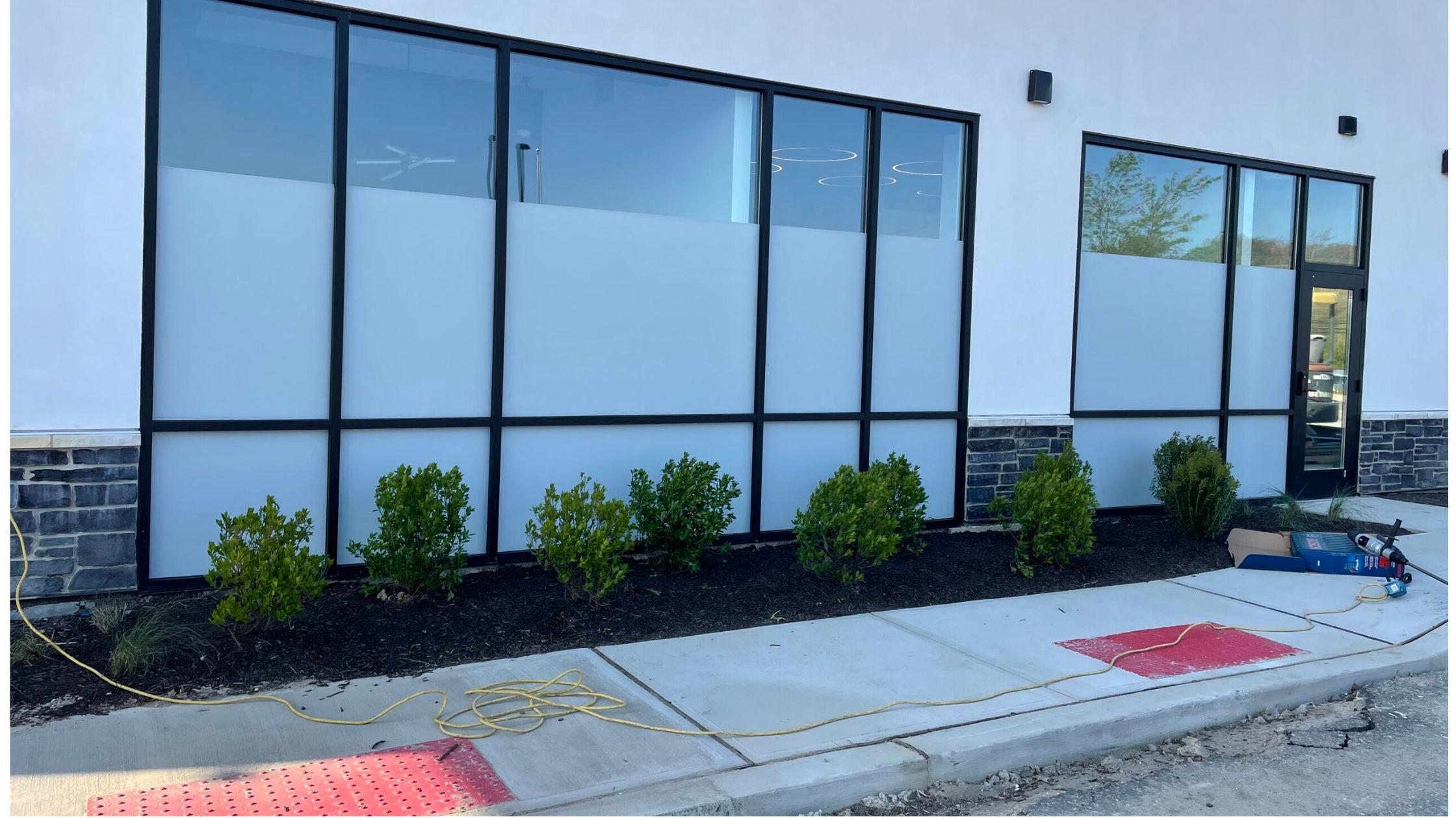
Custom etched glass creates the design directly within or on the glass, providing a permanent architectural finish. Decorative glass film, on the other hand, is applied to the existing glass surface. Modern decorative films can replicate the appearance of frosted, etched, textured, or patterned glass while also providing different levels of privacy.
For homeowners who want the appearance of specialty glass without replacing existing windows or investing in custom glass fabrication, decorative glass film can be a practical alternative. Manufacturers such as 3M and LLumar offer decorative films designed to create etched and textured glass effects while providing privacy and design flexibility.
What Is Decorative Glass Film?
Decorative glass film is a thin film applied directly to an existing glass surface. It can transform clear glass into a frosted, patterned, textured, gradient, or otherwise decorative surface. Unlike traditional window tint, which is often selected for solar control or glare reduction, decorative film focuses heavily on appearance and privacy.
Homeowners can use decorative film on windows, glass doors, shower doors, cabinets, partitions, and other smooth glass surfaces. Depending on the design, the film can partially obscure visibility or provide a higher level of privacy while still allowing natural light into the room. LLumar, for example, describes decorative films as solutions for privacy, light filtering, design enhancement, and creating an alternative to etched or textured glass.
What Is Custom Etched Glass?
Custom etched glass is glass that has been permanently altered to create a frosted, textured, patterned, or decorative appearance. The design may be created through techniques such as acid etching, sandblasting, or other glass processing methods. Because the design becomes part of the glass itself, it provides a permanent finish rather than a surface film.
Custom etched glass can be particularly attractive for homeowners who want a highly customized architectural feature. At Palm Beach Tint Pros, we understand that a specific pattern, logo, artwork, border, or decorative design can be incorporated into the glass depending on the fabrication process. The trade-off is that custom fabrication can make the project more expensive and less flexible to change later.
Cost: Decorative Glass Film vs Etched Glass
Cost is often one of the biggest reasons homeowners consider decorative glass film. Replacing existing glass with custom etched glass involves more than the decorative treatment itself. The project may involve measuring, fabrication, transportation, removal of existing glass, installation, and potentially modifications to frames or surrounding materials. Decorative glass film can often be installed directly onto existing glass, which can reduce the amount of work involved.
3M specifically positions its decorative glass films as a way to achieve the appearance of etched, cut, sandblasted, or textured glass at a fraction of the cost. The exact price difference will depend on the size of the glass, design complexity, film type, installation requirements, and the cost of custom glass fabrication in the homeowner’s area. For a homeowner looking for a design upgrade rather than a complete glass replacement, decorative film can therefore provide a more budget friendly starting point.
Privacy Benefits
Privacy is another major reason to compare these two options. Decorative glass film can change how much can be seen through a window or glass door. Frosted and matte films can obscure direct views while still allowing daylight to pass through.
This can be particularly useful in bathrooms, bedrooms, home offices, entryways, and glass doors facing neighboring properties. The amount of privacy can vary depending on the film design. Some films create complete visual obstruction, while others use patterns, gradients, stripes, or partial frosting to maintain a balance between privacy and visibility. Custom etched glass can also provide excellent privacy, but the design is permanent. Decorative film can offer greater flexibility if a homeowner later wants to change the level or style of privacy.
Is Decorative Glass Film a Good Etched Glass Alternative?
Decorative glass film can create a convincing etched glass appearance without requiring homeowners to replace their existing glass. It can also be removed or changed later, making it useful for homeowners who want flexibility.
This is particularly valuable when the purpose is primarily visual. If the homeowner wants a frosted bathroom window, a decorative pattern on an entryway door, or privacy on an interior glass partition, replacing the entire glass panel may not be necessary.
LLumar describes decorative film as a cost effective way to simulate etched or textured glass, while 3M similarly highlights its ability to create etched, cut, sandblasted, and textured glass effects. However, decorative film is not identical to actual etched glass. The visual effect, texture, permanence, and long term behavior can differ.
Durability and Maintenance
Custom etched glass is a permanent glass treatment, so there is no film layer to peel, replace, or remove. Decorative film, by comparison, is a surface applied material. Its longevity depends on the product, installation quality, glass location, exposure, cleaning practices, and other environmental factors.
High quality decorative films are designed for durable application, but homeowners should still follow the manufacturer’s cleaning and maintenance recommendations. A major advantage of film is that it can be updated. If a homeowner remodels a room or changes the interior design, the existing decorative film can potentially be removed and replaced with a different pattern. LLumar specifically highlights the ability to refresh decorative film when styles or homeowner needs change.
Installation: Film vs Custom Glass
Installation is another major difference. Decorative glass film can generally be installed directly on existing glass by a trained professional. This means the homeowner can change the appearance of a window or glass door without replacing the entire unit. Custom etched glass requires fabrication before installation. If the project involves replacing an existing glass panel, the old panel may need to be removed and the new one installed.
This can make decorative film particularly attractive for remodeling projects where homeowners want to minimize disruption. For the best appearance, professional film installation is still important. Poor surface preparation or installation can affect the finished appearance.
Natural Light
Decorative films can be selected to diffuse or filter light while reducing visibility. Frosted and translucent finishes can allow daylight into a room without maintaining a completely clear view through the glass. This can be useful in bathrooms and other private spaces where homeowners want a bright interior without sacrificing privacy.
Custom etched glass can achieve a similar effect, depending on the design and degree of frosting. The choice therefore depends on whether the homeowner prioritizes permanent architectural glass or flexible surface treatment.
Where Decorative Glass Film Works Well
Decorative glass film can be useful throughout the home. In bathrooms, frosted film can provide privacy without requiring replacement of existing windows. On entry doors and sidelights, decorative film can create a more finished appearance while reducing visibility from outside. In home offices, patterned or frosted film can provide separation from other areas while still allowing natural light to move through the space.
Glass shower doors and interior partitions can also benefit from decorative treatments. Kitchen cabinet glass can be another application where homeowners want to obscure contents or add a design element without replacing the cabinet doors.
When Custom Etched Glass May Be the Better Choice
Decorative film is not automatically the best solution for every project. Custom etched glass may be preferable when permanence is the highest priority. If the homeowner is building a new home and wants a specific architectural feature incorporated into the glass from the beginning, custom glass fabrication may make more sense.
It may also be appropriate when the design is highly specialized and needs to become a permanent part of the glass rather than an applied surface treatment. For luxury architectural projects, custom etched glass can provide a distinctive finish that is difficult to replicate exactly with a film. The decision should therefore consider the role the glass plays in the overall design rather than simply comparing upfront costs.
Decorative Glass Film vs Custom Etched Glass: Key Differences
Decorative glass film is generally the more flexible option. It can be applied to existing glass, changed later, and used to create a wide range of privacy and decorative effects. Custom etched glass is the more permanent option. It becomes part of the glass itself and can provide a highly customized architectural finish.
For homeowners primarily concerned with cost, privacy, and design flexibility, decorative film is often worth considering first. Marine Window Film can also be an option for boats and waterfront properties where privacy, solar control, and a clean appearance are important. For homeowners creating a permanent, highly customized architectural feature and who are comfortable with the additional fabrication involved, custom etched glass may be the better investment.
Does Decorative Window Tint Provide Privacy?
Decorative window tint or film can be designed to partially or substantially obscure visibility. Frosted, matte, patterned, and gradient films can provide different levels of privacy. However, privacy performance varies by product and lighting conditions. Homeowners should review samples in the actual room before choosing a finish, particularly if privacy is the primary objective.
How to Choose Between Decorative Film and Etched Glass
The easiest way to make the decision is to consider five factors: budget, permanence, design, privacy, and installation. If the project needs a cost effective design upgrade using existing glass, decorative film is an attractive option.
If the homeowner wants a permanent custom architectural feature and is prepared for fabrication and installation costs, etched glass may be more appropriate. If the design may change in the future, film has a significant advantage because it can provide a new appearance without replacing the glass. If privacy is the primary goal, both options can work. The right choice will depend on the desired visibility level, appearance, and budget.
Conclusion
For homeowners comparing decorative glass film vs custom etched glass, the decision largely comes down to flexibility, cost, privacy, and permanence. Decorative glass film offers a practical way to upgrade existing glass without replacing it. It can create an etched glass appearance, improve privacy, add visual interest, and allow homeowners to change the design later. Custom etched glass offers a permanent and highly architectural solution for projects where long-term customization is the priority.
For homeowners exploring Window Tinting in Jupiter, FL, decorative glass film can be an effective option for transforming existing residential glass while maintaining natural light and adding privacy. For marine applications where flexible privacy and visual control are important, Marine Smart Window Film may also be worth considering. For a cost-conscious homeowner looking to transform existing glass, decorative glass film can be an effective and flexible etched glass alternative.