
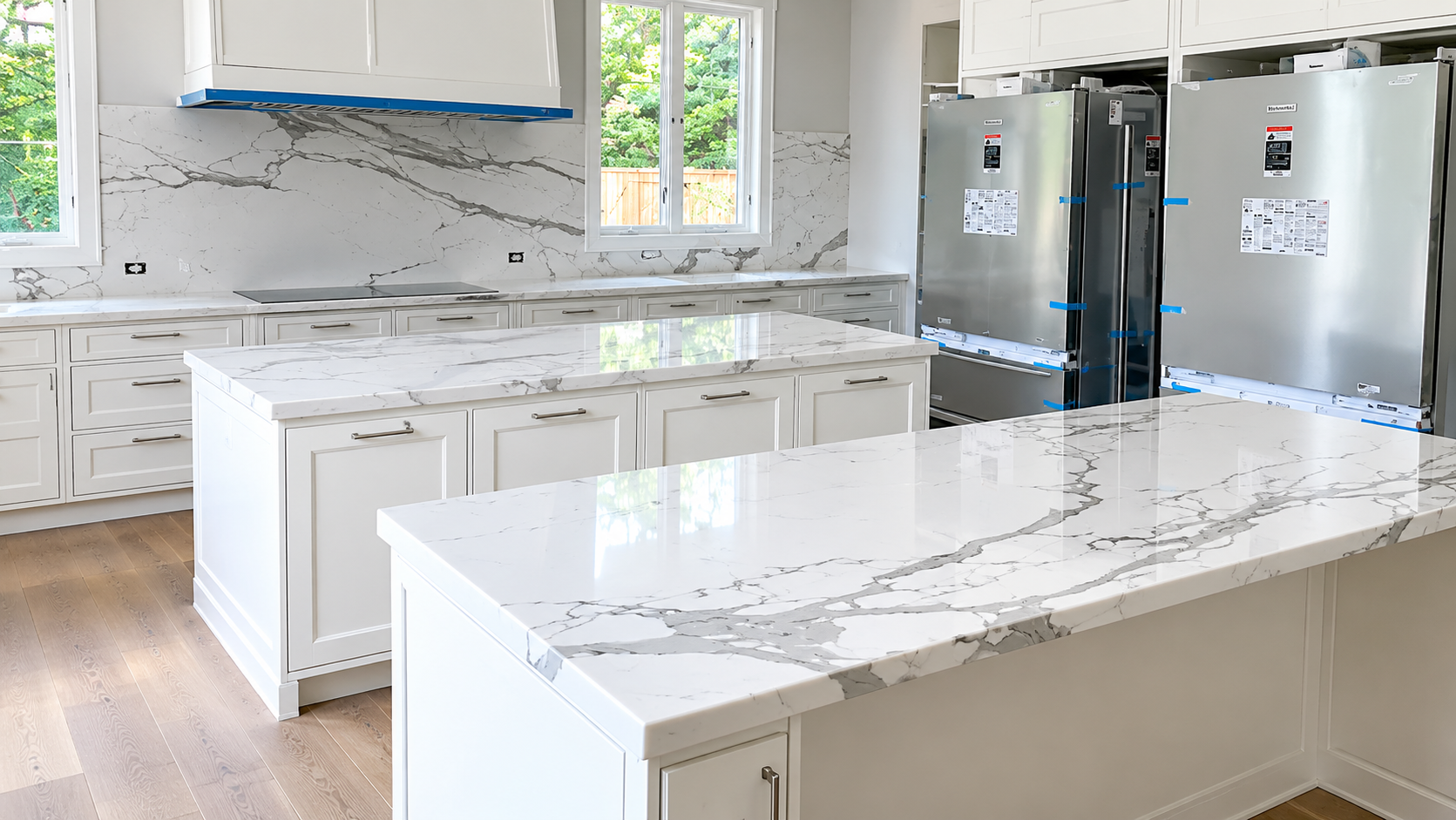
Kitchen countertops are among the hardest working surfaces in a home. They are exposed to food preparation, spills, cooking oils, utensils, cleaning products, moisture, and everyday wear almost every day. Even durable materials such as marble, granite, quartz, and other premium surfaces can develop scratches, stains, marks, or signs of wear over time. One way homeowners can add another layer of protection is countertop protection film.
Countertop protection film is a transparent protective layer installed over a compatible countertop surface. Instead of covering the appearance of the worktop with an opaque mat or replacing the surface when damage occurs, the film creates a protective barrier while allowing the underlying countertop design to remain visible.
Modern surface protection films are available specifically for interior surfaces such as kitchen countertops, marble islands, worktops, bathroom vanities, and other high touch areas. Some products are designed to help reduce scratches, stains, moisture exposure, and everyday surface wear
Why Do Kitchen Countertops Need Protection?
A countertop may look durable when it is first installed, but daily kitchen activity can be surprisingly demanding.
Knives and utensils can create minor scratches. Plates, pans, appliances, and containers can leave marks when repeatedly moved across the surface. Oil, coffee, wine, sauces, spices, and other substances can create stains if they remain on the surface.
Water is another common source of wear, particularly around sinks and food preparation areas. Cleaning also contributes to everyday surface exposure. Countertops may be wiped multiple times a day, sometimes with cleaning products that are not ideal for every material or finish.
Over time, these small sources of wear can affect the appearance of an otherwise expensive countertop. A countertop protection film provides an additional barrier between the original surface and many of these everyday exposures.
What Does Countertop Protection Film Protect Against?
The exact capabilities depend on the film, but countertop specific protection products can be designed to help reduce several common types of surface damage.
Minor Scratches
Everyday movement of dishes, utensils, small appliances, and other objects can create light surface scratches. A suitable protection film can absorb some of this everyday wear before it reaches the original countertop surface. Some countertop films are specifically marketed for protection against scratches caused by normal kitchen use.
However, protection film should not be considered completely scratch proof or cut proof. Sharp knives and heavy impacts can still damage the film. Homeowners should continue using cutting boards rather than cutting directly on the protected countertop.
Food and Beverage Stains
Kitchen countertops regularly encounter coffee, sauces, wine, oils, spices, and other substances that can leave marks. A suitable countertop film can create a barrier between these substances and the underlying surface. This can make everyday cleanup easier and reduce direct exposure of the original material. The film does not mean spills can simply be left unattended. Prompt cleaning is still important, particularly when dealing with strongly colored foods or liquids.
Oil and Grease
Cooking oils and grease can be difficult to remove from some countertop finishes. A surface protection film can provide an additional layer between cooking oils and the original countertop, which may simplify routine cleaning. This can be especially useful around areas where food preparation occurs frequently.
Water and Moisture
Countertops around sinks and preparation areas regularly encounter water. A suitable protection film can help reduce direct moisture exposure and water marks on compatible surfaces. However, homeowners should still pay attention to seams, joints, edges, and areas where water could penetrate underneath the film. Professional installation and proper edge finishing can be important for maintaining a clean appearance.
Is Countertop Protection Film Suitable for Marble?
Marble is attractive but can require careful maintenance. Its appearance can be affected by stains, scratches, etching, and other forms of surface damage depending on the material and finish. At Palm Beach Tint Pros, we understand that some countertop protection films are specifically designed for compatible marble surfaces. Current products are marketed for marble kitchen islands and countertops, although suitability depends on the specific marble, finish, condition, and film.
For homeowners with expensive marble countertops, professional assessment is worthwhile before installation. The goal should be to protect the existing surface without creating compatibility problems or changing its appearance unnecessarily.
Does Countertop Film Change the Appearance?
One concern homeowners may have is whether adding a protective layer will make an expensive countertop look different. Transparent countertop protection films are designed to preserve the visible appearance of the surface beneath them. Products are available in finishes intended to maintain clarity or provide different aesthetic effects.
The final appearance can still vary depending on the countertop material, polish, lighting, film characteristics, and installation quality. Professional installation is particularly important on premium countertops because bubbles, wrinkles, contamination, poor edge finishing, or improper alignment can be noticeable.
Countertop Protection Film vs Traditional Covers
Traditional countertop covers and mats can protect specific areas, but they do not necessarily provide continuous protection across the entire work surface. A protective film is installed directly over the countertop, creating a more integrated barrier.
This can be useful for kitchen islands and large worktops where homeowners want to preserve the appearance of the entire surface rather than constantly repositioning protective mats. A transparent film also allows the original countertop pattern and color to remain visible.
Is Kitchen Countertop Film Heat Resistant?
This is an area where homeowners should be particularly careful. Some countertop protection films can tolerate mild or brief heat exposure, but that does not mean they are designed for direct contact with extremely hot cookware.
A hot pan, baking tray, pressure cooker, or other heated object should not be placed directly on the protected countertop unless the specific product manufacturer expressly permits it. For everyday kitchen use, a heat resistant trivet or stand remains an important precaution.
Current countertop protection products specifically warn that they should not be treated as completely heat proof or burn proof.
Can You Cut Directly on Countertop Protection Film?
Countertop protection film is intended to help reduce everyday surface damage, not to replace a cutting board. Sharp knives can cut through the protective layer and potentially damage the countertop underneath.
Homeowners should continue using appropriate cutting boards, even after installing a high quality surface protection film. This is particularly important for expensive stone countertops where the objective is to preserve the original surface for as long as possible.
Does Protection Film Make a Countertop Stain Proof?
It is better to think of countertop film as stain protection rather than a guarantee of stain proof performance. A suitable film can create a barrier that helps prevent liquids and food substances from reaching the original countertop surface. Some products specifically promote protection against coffee, wine, oil, sauces, and other common substances.
However, spills should still be cleaned promptly. The performance of the film can also depend on the product, installation, maintenance, and type of substance involved.
How Is Countertop Protection Film Installed?
Professional installation generally begins with assessing the countertop. The installer may review the surface material, finish, condition, dimensions, edges, joints, sink cutouts, and other features before determining whether the film is appropriate.
The surface must then be properly prepared. Dirt, dust, grease, and other contaminants can affect the quality of the installation. The film is measured and positioned over the countertop before being applied carefully to the surface. Professional installers use controlled application techniques to minimize bubbles, wrinkles, and other visual imperfections.
Edges and corners require particular attention because they can be more vulnerable to lifting or contamination. The completed installation should then be inspected to ensure that the film is properly positioned and finished.
Why Professional Installation Matters
Installing a large protective film over a countertop is different from placing a small protective sheet over a surface. Kitchen countertops may have sink openings, cooktop cutouts, corners, seams, backsplashes, rounded edges, and other features that require precise trimming.
Poor installation can result in visible seams, trapped debris, bubbles, lifting edges, or an uneven appearance. Professional installation can also help ensure that the film selected is compatible with the countertop. For premium marble, quartz, granite, or designer worktops, professional assessment is especially important.
How Long Does Countertop Protection Film Last?
The lifespan of countertop protection film depends on the specific product, installation, countertop usage, cleaning routine, and environmental conditions.
Some products are designed and warranted for several years. For example, current countertop protection systems are available with multi year warranty options, although the exact warranty depends on the product, surface, installation, and applicable terms.
High use kitchen islands may experience more wear than a lightly used countertop. Homeowners should therefore consider expected usage when selecting a film rather than assuming every product will have the same service life.
How Should Countertop Protection Film Be Cleaned?
Maintenance should follow the film manufacturer’s instructions. In general, homeowners should avoid abrasive cleaning tools and harsh chemicals unless the product manufacturer specifically confirms they are suitable.
Regular cleaning is still necessary because the film is designed to protect the underlying surface, not eliminate the need for maintenance. Promptly wiping spills and avoiding sharp or abrasive objects can also help preserve the film.
Is Countertop Protection Film Worth It?
For homeowners with expensive or visually important countertops, surface protection film can be worth considering. Replacing a premium countertop can be considerably more disruptive than adding a protective layer to an existing surface. A protection film can help reduce everyday wear while preserving the appearance of the original material.
It can be particularly attractive for homeowners with new countertops who want to protect their investment from the beginning. It may also make sense for frequently used kitchen islands, where constant food preparation and serving can expose the surface to more wear. However, film is not a substitute for responsible countertop care. It should be viewed as an additional layer of protection rather than an invitation to use the surface without precautions.
What Countertops Can Benefit From Surface Protection Film?
The suitability of a countertop protection film depends on the specific product, but commonly marketed applications include marble, granite, quartz, ceramic, engineered stone, and other compatible worktops. Kitchen islands are another particularly useful application because they often function as preparation areas, serving spaces, work surfaces, and gathering points.
Bathroom vanities and other high touch surfaces may also be candidates for certain interior protection films. The important point is that compatibility should be confirmed before installation.
How Countertop Film Differs From Other Specialty Films
Homeowners may encounter several types of specialty films when researching ways to protect or improve different surfaces around a property. Marine Window Tinting, for example, is designed specifically for boat and yacht glazing to help manage solar heat, glare, and UV exposure. It is engineered for marine applications and should not be considered a substitute for countertop protection film.
Similarly, Residential Smart Film and Commercial Smart Film are primarily designed for glass applications where switchable privacy and visibility control are important. Countertop protection film serves a different purpose by creating a protective barrier over compatible kitchen and interior surfaces.
Understanding these differences is important because each film is formulated for a specific surface and environment. Choosing a product based on its intended application can help ensure the expected level of protection, appearance, and durability.
Countertop Protection Film for New Kitchens
Installing protection film soon after a countertop is installed can be a proactive approach to surface care. New countertops are often in their best condition immediately after installation. Protecting them early can help reduce exposure to everyday scratches, spills, and cleaning wear before visible damage develops.
This can be particularly valuable when the countertop is made from a premium or difficult to replace material. Homeowners planning a kitchen renovation can therefore consider surface protection alongside other finishing and maintenance decisions.
Countertop Protection Film for Existing Kitchens
Protection film is not limited to brand new countertops. Existing countertops can also potentially be protected if their condition and material are compatible with the selected film.
Before installation, the existing surface should be inspected. Cracks, chips, severe staining, damaged coatings, or other existing problems may need to be addressed first. A protective film is intended to protect a suitable existing surface, not conceal or repair serious structural damage.
Common Mistakes to Avoid
One common mistake is assuming that countertop film makes the surface completely scratch proof. It does not. Another is placing extremely hot cookware directly onto the protected surface. A heat resistant trivet should still be used.
Cutting directly on the countertop is another avoidable problem. Even a durable protection film is not intended to replace a cutting board. Homeowners should also avoid choosing a product without checking whether it is compatible with their particular countertop material and finish. Finally, attempting a complicated installation without the appropriate experience can result in bubbles, wrinkles, poor edge finishing, or other appearance problems.
Final Thoughts
Countertop protection film is an often overlooked way to add another layer of protection to one of the most frequently used surfaces in a home. For homeowners with marble, granite, quartz, or other premium countertops, the film can help reduce everyday exposure to minor scratches, food spills, oils, water marks, and routine surface wear. Transparent products can also preserve the underlying appearance instead of hiding the countertop beneath a permanent cover.
It is also important to distinguish countertop protection film from other specialty film solutions. Residential Smart Film and Commercial Smart Film are primarily used on glass when switchable privacy is desired, while Marine Window Tinting is designed for boat and yacht windows to help manage solar heat, glare, and UV exposure.
The important thing is to have realistic expectations. Surface protection film is not completely scratch proof, cut proof, or burn proof. Homeowners should continue using cutting boards, trivets, and appropriate cleaning practices. When the right film is selected for the right surface and professionally installed, countertop protection film can be a practical way to help preserve the appearance of a valuable countertop and potentially reduce the need for premature repairs or replacement.